What makes a watch a dress watch for women? It is not simply a small case, a gold tone, or a delicate strap. Women's Dress Watches are designed to support polished occasions with quiet, readable elegance. They often feature slim profiles, restrained dials, refined finishing, and straps made from leather, satin, or fine metal. A simple watch can speak clearly.
This guide examines the details that define this category. Case proportions matter because a watch should sit comfortably beneath a shirt cuff or evening sleeve. Dial color, hand shape, crystal quality, and clasp design also influence its appearance. Mechanical movements may offer traditional craftsmanship, while quartz movements provide dependable accuracy and easier daily use. Both choices can be appropriate.
Real-world wear reveals more than photographs. A glossy black dial may look striking indoors but reflect bright restaurant lighting. A narrow bracelet may feel elegant yet less secure during movement. Even a precious-metal finish can seem excessive in a conservative workplace. Personal taste remains important, and no single specification guarantees sophistication. That is worth remembering.
The discussion will also consider materials, maintenance, sizing, and the difference between formal and versatile designs. Reliable guidance should acknowledge comfort, durability, and budget alongside appearance. A dress watch is rarely the loudest accessory in the room. Its strength may appear in small moments: a clean 28-millimeter case, a neatly finished crown, or a strap that rests smoothly against the wrist. Yet some watches marketed as “dress” pieces are impractical for everyday life. Careful comparison helps separate genuine refinement from attractive advertising.
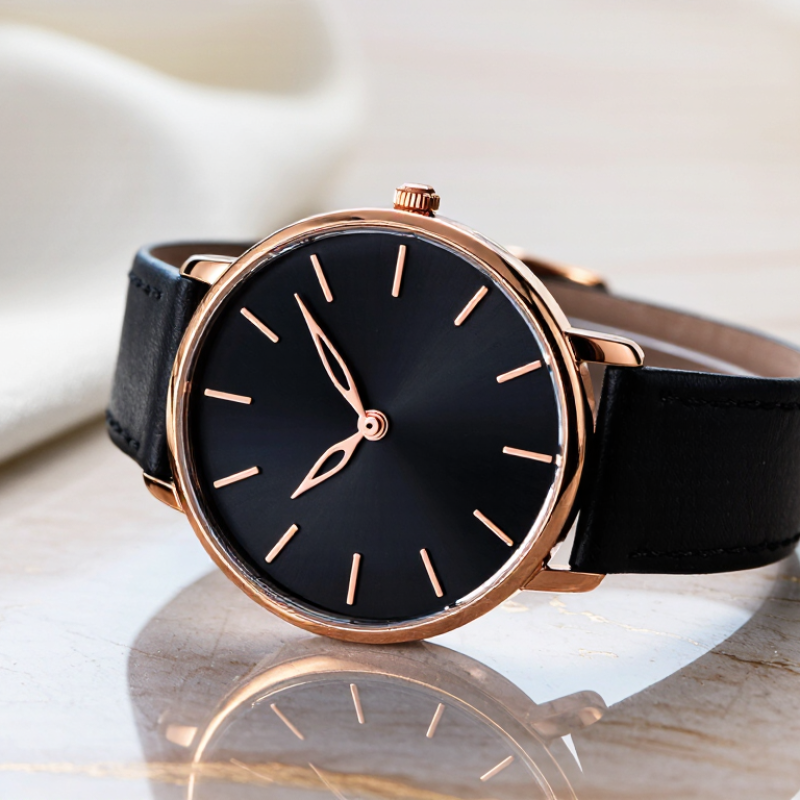
What Is a Dress Watch for Women?
Defining a Women’s Dress Watch Through FHH Industry Classifications
A women’s dress watch is not defined by size alone. The Fondation de la Haute Horlogerie (FHH) treats watch categories through design, function, and construction. Its professional vocabulary places dress watches close to the classical watch family. Typical features include a slim case, balanced proportions, a clean dial, and restrained decoration. Gender is not a technical classification. It is a market description.
A practical dress watch often measures about 28 to 36 millimeters. This range is not a rule. Smaller or larger cases can still look formal, depending on the wrist and clothing. Precious metal, polished surfaces, and a simple hand display may support a refined appearance. A leather strap can make the watch feel quieter. A metal bracelet may add structure. FHH’s approach reminds us to judge the whole object, not one visual detail.
Industry data also gives useful context. The Federation of the Swiss Watch Industry reported Swiss watch exports of approximately CHF 26.0 billion in 2024, after a record year in 2023. Deloitte’s Swiss Watch Industry Study 2024 identified changing consumer preferences and stronger interest in personal expression. That matters for women’s dress watches. Formal style is becoming less rigid. A dress watch may now move from a reception to an office without looking misplaced. The classification remains useful, but imperfect. I would question any definition that depends only on femininity, price, or case diameter.
What Is a Dress Watch for Women?
Case Proportions: Evaluating 26–36 mm Sizes for Formal Wristwear
A women’s dress watch often succeeds through proportion, not decoration. The 26–36 mm range offers useful flexibility for formal wristwear. A 26–28 mm case looks delicate on a narrow wrist. It can also appear visually lost beneath a wide cuff. Sizes from 29–32 mm usually create a balanced, quiet presence. They suit many wrist shapes without dominating tailored clothing. Cases from 33–36 mm provide stronger legibility and a modern profile. However, they may feel less traditional at black-tie events.
The Federation of the Swiss Watch Industry records exports by case-size categories, including under 30 mm and 30–35 mm. This classification shows that sizing remains a serious industry measurement, not merely a style opinion. Deloitte’s Swiss Watch Industry Study 2024 also reports continuing shifts in consumer preferences and gender expectations. Case choice is becoming more personal. In practice, lug length matters as much as diameter. A 32 mm case with long lugs can wear larger than a compact 36 mm design. Wrist circumference alone cannot decide the answer. That is the imperfect part.
Tips: Measure the visible case, not only the diameter. Keep the lugs inside the wrist edges. Test the watch under a shirt cuff. Choose a thinner profile for formal sleeves. A small case should still offer clear reading. Otherwise, elegance becomes inconvenience.
The chart compares the theoretical circular frontal area of watch cases across common formal sizes. Values are calculated from A = πr², so a small increase in diameter produces a larger increase in visible case area.
Case diameters shown: 26, 28, 30, 32, 34, and 36 mm. Areas are theoretical geometric footprints and do not include lugs, crowns, bezels, or strap width.
A dress watch for women often favors restraint over spectacle. Its case may slide beneath a shirt cuff, while a clean dial stays readable across a dinner table. Yet elegance is not only visual. The movement matters, especially when daily accuracy reflects careful engineering.
COSC’s mechanical standard allows a daily variation of −4 to +6 seconds. That range means a certified movement may lose four seconds or gain six seconds in one day. It is a demanding benchmark, not a promise of perfect timekeeping. The testing process examines the movement in multiple positions and temperatures. Real life is less controlled. Wrist angle, movement, shocks, magnetism, and winding habits can all affect results.
I once assumed a higher accuracy rating would remove every small inconvenience. It did not. A watch can meet the standard and still need occasional adjustment. That is part of its character, though perhaps not always convenient.
For a dress watch, a quiet mechanical movement can feel like a private detail beneath polished clothing. Check the time over several days, not just one morning. A ten-second change may reveal a pattern, or simply an active day. The −4/+6 specification gives you a reliable reference when judging that behavior. Accuracy becomes more meaningful when paired with comfort, legibility, and the patience to observe the watch.
A dress watch for women depends on restraint, not decoration alone. Its materials should feel refined, comfortable, and honest under close inspection. Gold brings warmth and weight, but purity affects durability. A higher-karat case can show scratches more easily. Steel offers practical resistance and a cooler visual tone. The finishing matters just as much. Polished edges catch light sharply, while brushed surfaces hide small marks better.
Sapphire crystal is another important choice. The Gemological Institute of America places sapphire at 9 on the Mohs hardness scale, below diamond but above most everyday minerals. It resists scratching well, although it can still fracture after a hard impact. That difference is easy to forget.
A thin crystal may look elegant, yet a slightly raised profile can improve protection. I would not call sapphire indestructible.
Dial legibility
Dial legibility should guide every finishing decision. A 2024 Deloitte Swiss Watch Industry Study surveyed more than 75 industry executives and identified transparency and sustainability as continuing industry concerns. That makes material origin and long-term use more relevant than surface glamour.
On a small dial, strong contrast usually works best: dark hands against a pale background, clear minute markers, and limited reflective treatment. Applied details can look beautiful, but excessive shine may disappear beside a window. Try reading the time at arm’s length, in soft indoor light, without tilting the wrist. That simple test often reveals more than photography does.
A women’s dress watch is usually slim, restrained, and comfortable under a shirt cuff. Yet elegance does not remove daily risks. Coffee splashes, hand washing, rain, and humidity can reach a case quickly. ISO 22810:2010 provides a useful benchmark for water resistance. Its testing covers pressure, condensation, and water exposure under controlled laboratory conditions.
A 3-bar rating represents pressure equivalent to about 30 metres of water. It does not mean safe diving to 30 metres. The ISO standard warns against treating laboratory pressure as real-world depth. Movement, temperature changes, soap, and ageing seals can alter performance. A 5-bar watch offers more practical flexibility, but it still needs careful handling. Dress watches often use small crowns and thin cases. Those details may limit everyday protection.
I once trusted a “30-metre” rating during a long shower. That was careless. The watch survived, but the lesson was expensive. Water resistance is not permanent. The International Organization for Standardization recommends testing conditions that manufacturers must meet, while service professionals commonly advise periodic inspection of seals. A 2024 industry report from Deloitte also identifies durability and reliability as important factors in watch purchasing decisions. Ratings help, but habits matter more. Keep the crown closed. Avoid hot water. Do not press buttons underwater. A beautiful watch can remain practical, though the standard cannot predict every bathroom, beach, or sudden summer storm.
It usually has a slim case, balanced proportions, a clean dial, and restrained decoration. Size alone does not decide it. Gender describes the market, not the technical design.
Many practical examples measure between 28 and 36 millimeters. This range is only a guide. A larger or smaller case can still look formal on the right wrist.
Precious metal, polished surfaces, and simple hands can support an elegant look. A leather strap feels quieter under a sleeve. A metal bracelet adds structure and visual weight.
Yes. Current formal style is less rigid than before. A restrained watch can suit an office, dinner, or reception. Clothing and wrist size still matter.
No. A 3-bar rating equals laboratory pressure near 30 metres. It does not mean diving 30 metres underwater. That distinction is easy to miss.
Hand washing, rain, coffee splashes, humidity, and showers can create problems. Hot water is especially risky. Avoid buttons underwater.
Keep the crown fully closed and avoid sudden temperature changes. Do not rely on an old rating. Ask for periodic seal inspection.
No. Seals age, and impacts may reduce protection. A watch may survive one careless shower, but that proves little. I once trusted the number too much. That was careless.
Not always. Its main purpose is formal, everyday wear. A 5-bar rating offers more flexibility, but careful habits remain necessary. Laboratory testing cannot predict every storm or bathroom.
A women’s dress watch is defined by refined proportions, reliable performance, and an appearance suited to formal occasions rather than by decoration alone. Within industry-style classifications, Women’s Dress Watches typically emphasize balanced case dimensions, with sizes around 26–36 mm offering a discreet presence while remaining readable and comfortable. Mechanical accuracy may be evaluated against the COSC standard of −4/+6 seconds per day, providing a practical benchmark for precision.
Materials and finishing also shape the watch’s character. Gold can add warmth and elegance, while polished or brushed steel offers versatility and durability. Sapphire crystal helps protect the dial, whose layout should remain clear without excessive detail. Water resistance is another useful consideration: watches tested under ISO 22810 principles can better withstand everyday exposure to moisture, although they are not intended for specialized diving. Together, proportion, accuracy, material quality, legibility, and practical protection create a dress watch that feels elegant, dependable, and appropriate for daily formal wear.