Choosing Quartz Movement Wristwatches is not merely a matter of picking a dial that looks good beneath a cuff. It means weighing accuracy, battery life, durability, service needs, and comfort against your daily routine. A slim case may disappear under a shirt sleeve; a clear seconds hand can matter more than a polished bezel. Small details count.
The Federation of the Swiss Watch Industry’s 2023 report recorded CHF 26.7 billion in Swiss watch exports. That figure covers a broad market, not quartz watches alone, so it cannot tell buyers which model to choose. It does, however, show the scale and commercial importance of watchmaking. Seiko founder Kintaro Hattori’s guiding phrase, “Always one step ahead of the rest,” reflects the industry’s drive for practical innovation. For shoppers, innovation should still earn its place on the wrist.
This guide explains how to compare quartz movements, case materials, water resistance, displays, and replacement-battery requirements. It also considers the trade-offs between low-maintenance convenience and repairability. Look beyond advertised precision: real-world accuracy can vary, and specifications do not reveal how a watch feels after a long day. There is no perfect pick. A sensible choice is the one whose functions you will actually use, whose size suits your wrist, and whose upkeep you understand before buying.
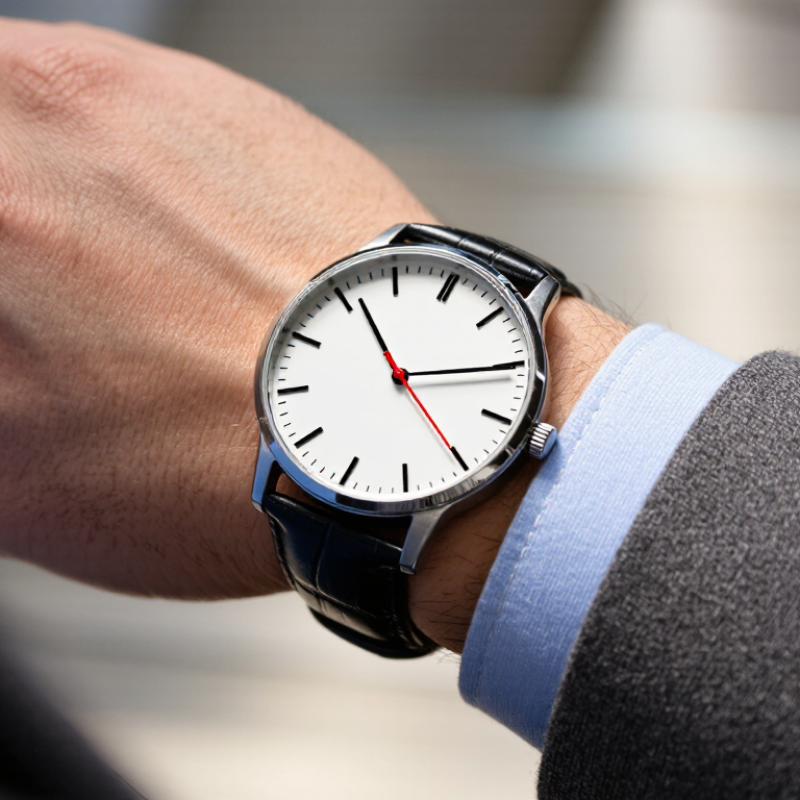
A quartz watch uses a battery to send a small electric current through a quartz crystal. The crystal vibrates at a steady frequency, commonly 32,768 times per second. A circuit counts those vibrations and sends a pulse to a tiny motor. In an analog watch, the motor advances the second hand, often in one-second steps. That is the loop. Digital models use the same timing principle but show the time on a screen instead. The movement has few parts, yet battery condition and temperature can affect performance.
When choosing a quartz wristwatch, consider how you will read and wear it. Check that the hands are easy to see in dim light, and that the case sits comfortably on your wrist. If you need a date display, make sure its numbers are clear at a glance. Quartz watches are generally accurate and low-maintenance, but “low-maintenance” does not mean maintenance-free: batteries eventually need replacing, and seals can wear. A one-second tick may feel a little mechanical; for some wearers, that is a drawback, while others appreciate the clear rhythm. I would compare a watch in person if possible, since a dial that looks crisp in a photograph can be surprisingly hard to read on the wrist.
A useful daily watch should be easy to read at a glance. Check the dial in bright sunlight and under indoor lighting. High-contrast hands and clear hour markers help when you are commuting or checking the time between tasks. A date window can be handy, but a tiny one may be more distracting than useful.
Comfort comes first. Try to match the case size to your wrist, and notice whether the crown presses into your hand when you bend it. A lightweight watch can feel pleasant during a long workday, though it may seem less substantial than expected. Strap material matters, too: metal can feel cool and sturdy, while a soft strap may suit warm weather better. Fit can change through the day, so leave a little room.
Check the water-resistance rating against your actual routine, not just the number on the dial. Ratings are tested under controlled conditions, and seals can wear over time. For frequent swimming, follow the maker’s guidance and have the seals checked periodically. Also consider battery access or solar charging, plus the cost and convenience of maintenance. Quartz movements are generally low-maintenance, but “set it and forget it” is not quite true. A dead battery still stops the watch.
How to Choose Quartz Movement Wristwatches?
Quartz watches differ in how they get power. A standard battery is simple and compact, but it needs replacement when depleted, often every few years. Solar quartz models collect light through the dial and store energy in a rechargeable cell. They need regular exposure to light; long periods in a dark drawer may stop them. Battery models suit people who want straightforward ownership. Solar models reduce routine battery changes, though their cells can eventually lose capacity. The trade-off is easy to miss.
Accuracy also varies. Many quartz watches stay within roughly 15 seconds per month, but the movement, temperature, and condition can affect results. Check the maker’s stated tolerance rather than assuming every quartz watch performs alike. For maintenance, battery models may need a fresh cell and a seal check when opened. Solar versions need less frequent attention, but their rechargeable cells are not permanent. Water resistance can also weaken over time, so a rating is not a lifetime guarantee.
Tips: Compare the stated accuracy, expected power-cell life, and service options before buying. If you swim or wash your hands often, ask about seal testing. A watch that gains or loses time may need attention; small drift is normal, but not always convenient. I’d weigh ease of upkeep against charging habits, not just the dial’s appearance.
When choosing a quartz watch, consider how the case sits on your wrist, not just its diameter. A case with long lugs can feel wide, even when the measurement looks modest. Check the thickness under a shirt cuff, too. Stainless steel feels cool and solid, while resin is lighter and more casual. Comfort comes first. If possible, wear the watch for several minutes and notice whether its edges press against your wrist.
The dial should be easy to read in the lighting you actually use. High contrast between the hands and background helps at a quick glance. Applied markers add depth, while printed numerals can keep the face looking simple. A busy dial may seem appealing online, then feel crowded in person; I would check the time from arm’s length before deciding. Small details matter. Consider whether a date window is useful or merely takes space.
Choose a strap that suits both your routine and the case. Leather can look neat, but may feel less comfortable in heat or during active days. Metal bracelets are durable, though their fit may need careful adjustment. Silicone or fabric straps offer a lighter, relaxed feel. Check that the strap width matches the lugs and that the buckle sits comfortably. Preferences change with wear, and that is worth allowing for. A color that works with one outfit may be harder to pair every day.
These are example dimensions, not a universal sizing standard. Choose a case diameter that feels comfortable on your wrist, then measure the distance between the case lugs to find the correct strap width. For the dial, prioritize clear contrast and markings that are easy for you to read.
A quartz watch should feel consistent, not merely polished under shop lighting. Check that the seconds hand lands near the markers, the crown turns smoothly, and the case has no sharp edges or loose parts. Ask for the movement’s stated accuracy tolerance; do not assume every quartz watch performs identically.
The Swiss Watch Industry Federation recorded 16.9 million Swiss wristwatches exported in 2023, across movement types. That figure signals a large market, not proof that any individual watch is well made. Judge the sample in your hand.
Read the warranty before comparing prices. Confirm its duration, which movement faults it covers, and whether the battery, seals, or accidental damage are excluded. A written warranty is useful, but it is not protection against every failure.
For a water-resistant model, ask whether pressure testing is available; a rating printed on the case cannot confirm its present condition. Then compare the full cost: purchase price, battery changes, replacement straps, and likely service. A cheaper watch may be better value, or it may simply shift costs later.
This checklist has limits: a brief inspection cannot reveal every internal defect, so keep the receipt and warranty details.
Its battery sends a small current through a quartz crystal. The crystal vibrates 32,768 times per second, and a circuit counts those vibrations.
A circuit sends pulses to a tiny motor, which advances the second hand. Often, it moves in one-second steps. A clear rhythm.
They use the same basic timing principle but display the time on a screen instead of hands. The display changes how you read it.
Look for clear hands in dim light and a case that sits comfortably on your wrist. Check date numbers at a glance, too.
They usually need little care, but batteries eventually need replacement and seals can wear. Low-maintenance is not maintenance-free.
Check whether the second hand lands near its markers, the crown turns smoothly, and the case has no sharp edges or loose parts. I might still miss a hidden flaw.
Confirm its duration and which movement faults it covers. Battery changes, worn seals, and accidental damage may be excluded.
Consider the purchase price, battery changes, replacement straps, and likely service. A lower price may save money, or shift costs later.
Choosing Quartz Movement Wristwatches starts with understanding how they use a battery or other power source to keep time and how their movement differs from other watch types. Consider the features that suit your daily routine, such as readability, useful functions, water resistance, and overall comfort. Comparing power sources can help you understand expected battery life, timekeeping accuracy, and the maintenance each option may require.
Next, choose a case, dial, and strap that match your preferences and feel comfortable for regular wear. Before buying, inspect the watch’s construction and materials, review the warranty, and consider the total value rather than focusing on appearance alone. By weighing practical needs alongside style, you can select a dependable watch that fits your lifestyle and budget.