british design. established since 1966.
every watch backed by a 2 year guarantee
0%

Choosing a watch should begin with your wrist, your routine, and the details you notice every day. The best Ladies Analogue Watches balance readable timekeeping with a shape and finish you enjoy wearing. A petite case may sit neatly beneath a shirt cuff, while a larger dial can be easier to read at a glance. Neither choice is automatically better. Comfort matters more than a size chart suggests.

Horology consultant Elena Ward puts it this way: “A good watch should feel natural on your wrist before it looks striking in a photograph.” Use that idea as a practical test, not a strict rule. Check the case diameter, strap length, clasp, and weight. Notice whether the hands stand out clearly against the dial. A polished metal bracelet can feel cool and smooth; a leather strap may soften with wear, though it needs care. Small details count.

This guide explores movement types, materials, water resistance, and everyday styling. It also considers budget and maintenance, because a watch is a lasting purchase, not just an accessory. Some features sound impressive but may not matter to your routine. Be honest about that. Try watches in person when possible, and compare how they feel after several minutes. Your first choice may not be your best one.
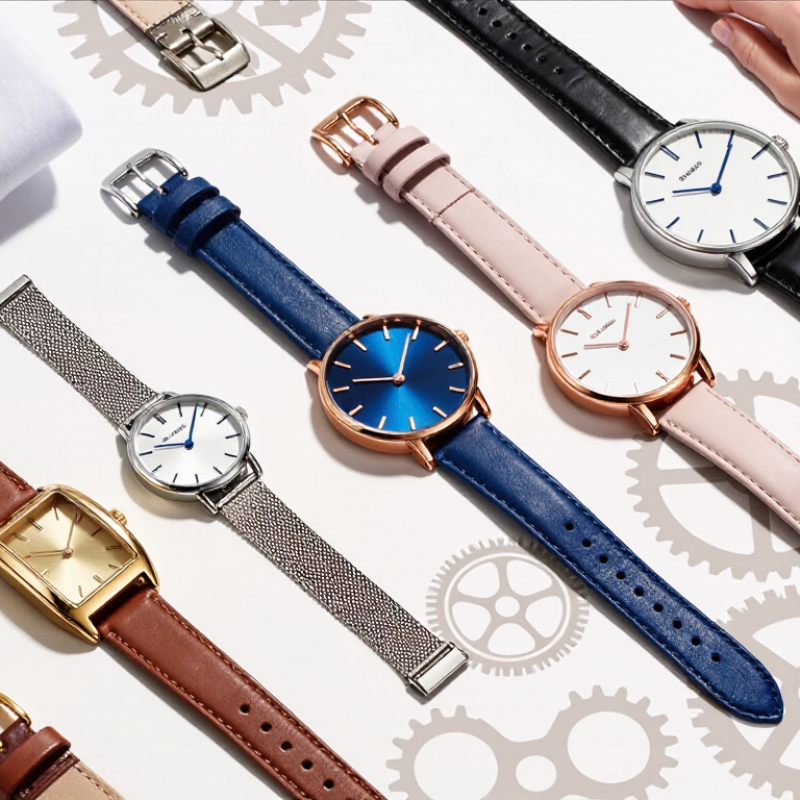
How to Choose the Best Ladies Analogue Watches?

Understand the Main Features of Ladies’ Analogue Watches

Ladies’ analogue watches are easiest to judge by how they work on your wrist, not by appearance alone. Fit comes first. Check the case diameter and thickness against your wrist, then see whether the lugs sit flat rather than overhanging. A smaller dial may feel neat, but tiny hour markers can be hard to read in dim light. Clear numerals, strong contrast, and a second hand help with quick checks. Deloitte’s 2024 Swiss Watch Industry Study surveyed 6,000 consumers across six markets, showing the breadth of watch buyers considered in its research. Preferences differ, so that figure cannot tell you which size will suit you.

Look at the movement, strap, and water-resistance marking, too. Quartz movements usually need less day-to-day attention; mechanical movements need regular wear or winding. Leather can feel soft, but sweat and rain may age it faster than a metal bracelet or washable synthetic strap. Not a minor detail. ISO 22810:2010 sets test requirements for water-resistant watches; a depth marking is not a promise that the watch is suitable for swimming at that depth. Match the rating to your routine and check the maker’s care guidance. Comfort is personal, and I’d still try a watch on before choosing—the clasp or crown can press in ways a product photo never shows.

Identify Your Needs for Style, Comfort, and Daily Use

Choosing the best ladies’ analogue watch starts with the moments it needs to serve. For desk work, a slim case may slide beneath a sleeve more easily. For walking or commuting, a clear dial helps you check the time quickly. Think about whether you prefer numerals, simple markers, or a date window. A beautiful dial is less useful if it takes effort to read in dim light.

Comfort matters over a full day. Compare the case size with your wrist, and check whether the strap sits flat without pinching. Metal bracelets can feel cool and substantial, while leather or fabric straps may feel lighter. Small details matter. Try it on, if possible, and move your wrist naturally before deciding.

Tips: Measure your wrist with a soft tape, then compare that measurement with the watch’s case and strap details. Check the stated water-resistance rating against your routine; ratings do not mean every watch suits swimming. Look for clear controls and a clasp you can fasten without help. It is easy to focus too much on color, then notice later that the watch feels bulky. Give comfort and readability equal weight.

Compare Watch Movements, Materials, and Display Features

A ladies’ analogue watch should suit how you actually use it, not just how it looks in a display case. Quartz movements are usually accurate, low-maintenance, and practical for daily wear. Mechanical movements need regular winding or wear, and may require more servicing. Neither is automatically better. Consider whether you prefer convenience or the motion and craft of a mechanical mechanism. If dependable timekeeping matters most, quartz is often the simpler choice.

Materials affect comfort and durability. Stainless steel resists everyday wear, while leather can feel softer but may show marks sooner. A lightweight case may be easier to wear all day, though it can feel less substantial. Check the clasp and strap adjustment in person if possible. For the display, compare clear numerals, hand contrast, and readability in dim light. A decorative face can look lovely, but tiny markers may slow down quick time checks. I might choose differently after trying it on.

Tips: Tilt the watch under indoor light to check for glare. Make sure the hands stand out from the dial. If you have a smaller wrist, compare case width and strap fit, not just the listed diameter. A few minutes of trying it on can reveal an awkward fit.

Evaluate Size, Readability, Durability, and Water Resistance

How to Choose the Best Ladies Analogue Watches?

Case size affects both comfort and balance. Measure your wrist, then compare the watch’s case diameter and lug-to-lug length. A broad case can overhang a narrow wrist, while a tiny dial may be hard to read. Try the watch with a sleeve, too. Fit is personal.

Readability matters during ordinary moments: checking the time in a dim hallway or outdoors in bright sun. Look for clear contrast between the hands and dial, distinct hour markers, and a date window you can actually read. Luminous hands help at night, but their brightness and duration vary. A crowded dial may look elegant online and still prove frustrating in daily use.

For durability, consider a sturdy case, a scratch-resistant crystal, and a strap that feels secure without pinching. Inspect the clasp and crown; small parts can affect long-term usability. Water resistance should match your routine, not just sound impressive. Check the stated rating and care guidance, and remember that seals can wear over time. Water-resistant does not mean suitable for every swim. No rating lasts forever. A tidy specification sheet cannot replace a comfortable fit or sensible care.

How to Choose the Best Ladies Analogue Watches? - Evaluate Size, Readability, Durability, and Water Resistance

Evaluation Factor What to Look For Useful Reference How to Check
Case size and fit Choose a case diameter and thickness that feel balanced on your wrist and sit comfortably beneath a sleeve. Cases around 26–32 mm are often considered petite to medium, but preferred proportions vary with wrist size and personal style. Check the case diameter, thickness, and lug-to-lug measurement. Try the watch on if possible; the lugs should not extend beyond the wrist.
Readability Look for strong contrast between the dial and hands, clear hour markers, and hands that are easy to distinguish at a glance. A simple dial, distinct minute and hour hands, and legible markers can make time easier to read. Lume helps in low light only if the watch has luminous material. View the dial in bright and dim conditions. Check whether decorative details, reflective crystals, or small markers make the time harder to read.
Case and crystal durability Consider materials suited to how often and where you plan to wear the watch. Stainless steel is commonly used for watch cases. Sapphire crystal is generally more scratch-resistant than mineral glass, while mineral glass is widely used and may be more affordable. Read the specifications for the case and crystal materials. Check that the crown and caseback feel secure and that the finish suits everyday use.
Strap or bracelet Choose a comfortable fit and a material appropriate for your routine, climate, and care preferences. Leather can be comfortable but is generally less suited to repeated exposure to water. Metal bracelets and many synthetic straps are often easier to wipe clean. Check adjustability, clasp security, and whether replacement straps are available. Follow the maker’s care guidance for the specific material.
Water resistance Match the stated water-resistance rating to the activities you expect to do while wearing the watch. A 3 bar (30 m) rating is generally intended for splashes, not swimming. A 5 bar (50 m) rating is commonly suitable for surface swimming, but guidance varies by watch and manufacturer. Check the watch’s instructions rather than relying on the depth number alone. Water resistance can diminish over time; avoid operating the crown or pushers in water unless the instructions allow it.
Movement and maintenance Consider whether you prefer a battery-powered quartz movement or a mechanical movement that may need regular winding and servicing. Quartz watches typically run on a battery; mechanical watches operate through a mainspring and require different care. Service needs depend on the movement and manufacturer. Review the movement type, battery replacement or servicing guidance, and warranty terms before purchasing.

Note: Size ranges and water-use guidance are general references, not guarantees. Always check the specific watch’s specifications and care instructions.

Set a Budget and Select a Watch That Fits Your Priorities

Set a firm ceiling before comparing ladies’ analogue watches, and include tax, a replacement strap, and possible servicing. The Swiss Watch Industry Federation reported that Swiss watch exports reached CHF 25.99 billion in 2024, down 2.8% from 2023. That figure describes exports, not women’s retail budgets, but it shows why prices vary widely across watch categories. Deloitte’s 2024 Swiss Watch Industry Study surveyed more than 6,000 consumers in eight markets and noted stronger interest in pre-owned watches among younger buyers. A pre-owned option may stretch a budget, but check its condition and service history.

Then rank what matters in daily use. A clear dial, comfortable case, dependable movement, and suitable water resistance may matter more than decorative extras. For example, if you wash your hands often, check the stated water-resistance rating rather than assuming a watch can handle splashes. Try the case on your wrist; a 30-millimetre face can feel very different on different wrists. Small details matter. A lower-priced quartz watch may suit someone who values convenience, while another buyer may prefer a mechanical movement and accept more upkeep. A common misstep is spending most of the budget on appearance, then overlooking fit or maintenance. I would leave room for one compromise; priorities can change after a week of wear.

How to Choose the Best Ladies’ Analogue Watch: Set a Budget

Example allocation for a $300 watch budget

This is a sample budget plan, not a market-price survey. Prioritize the watch’s movement, readability, and comfort, while reserving funds for fit, delivery costs, and future care.

FAQS

How should I choose a watch for daily use?

Start with your routine. A slim case can slide under a shirt cuff. Clear markers help during a quick commute check. Looks can mislead.

What movement suits everyday wear?

Quartz is usually accurate and needs little maintenance. Mechanical watches need winding or regular wear, plus possible servicing. Convenience matters most to me, though I might change my mind.

How can I find a comfortable fit?

Measure your wrist with a soft tape. Compare case width, lug-to-lug length, and strap details. Move your wrist while trying it on. No pinching.

Which dial features improve readability?

Look for strong contrast between the hands and dial, distinct markers, and readable numerals. Tilt it under indoor light to check for glare. Tiny markers can frustrate.

Which materials are practical?

Stainless steel handles everyday wear well. Leather may feel softer, but can show marks sooner. A metal bracelet may feel cool and substantial; fabric can feel lighter.

Does water resistance mean I can swim with the watch?

Not necessarily. Match the stated rating and care guidance to your routine. Seals can wear over time, and ratings do not suit every swim.

What should I inspect before buying?

Check the clasp, crown, and strap adjustment. Make sure you can fasten it without help. Small parts matter.

Are luminous hands and date windows useful?

Luminous hands can help at night, but brightness and duration vary. A date window helps only if you can read it easily. Simple is sometimes better.

Conclusion

Choosing the best Ladies Analogue Watches begins with understanding the features that matter most, from clear hour markers and dependable timekeeping to a design that suits your personal style. Consider how and where you plan to wear the watch: a lightweight, comfortable option may be ideal for daily use, while a more polished design may better suit special occasions. Compare movement types, case and strap materials, and display details to find a watch that feels practical as well as attractive.

Before deciding, check the watch’s size, readability, durability, and water resistance against your routine. A face that is easy to read and a fit that feels comfortable can make a noticeable difference in everyday wear. Finally, set a realistic budget and weigh each feature according to your priorities. The right choice is not necessarily the most elaborate one, but the watch that best balances comfort, usefulness, appearance, and value.


Clara Bennett

Clara Bennett

Clara Bennett is a professional marketing specialist with a strong understanding of the company’s products, customer needs, and the practical considerations that shape purchasing decisions. She regularly contributes expert articles to the company website, making complex product information clear,......