Choosing a chronograph is about more than liking the busy dial. Men's Chronograph Watches can time short events, but their extra subdials and pushers should suit your daily routine. A runner may value a clear seconds scale; someone in an office may care more about a slim case that slides beneath a cuff. Small details matter.
This guide explores ten practical checks before you buy. It covers movement type, case size, dial legibility, strap comfort, water resistance, and service needs. Quartz models often offer straightforward operation, while mechanical models may appeal to buyers who enjoy traditional watchmaking. Neither choice is automatically better. The right one depends on how you plan to wear it and what you can comfortably spend.
Try the watch on, if possible. A 42-millimeter case can feel very different across wrists, and polished steel may show scratches sooner than expected. Check that the pushers feel usable and that the subdials are easy to read in ordinary light. Also confirm the manufacturer’s stated water-resistance rating; a chronograph’s buttons are not an invitation to press them underwater. Details can be easy to overlook.
I would not judge quality by weight alone. A heavy watch can feel reassuring at first, then tiring by evening. The following tips offer a careful starting point, though personal comfort still matters most.
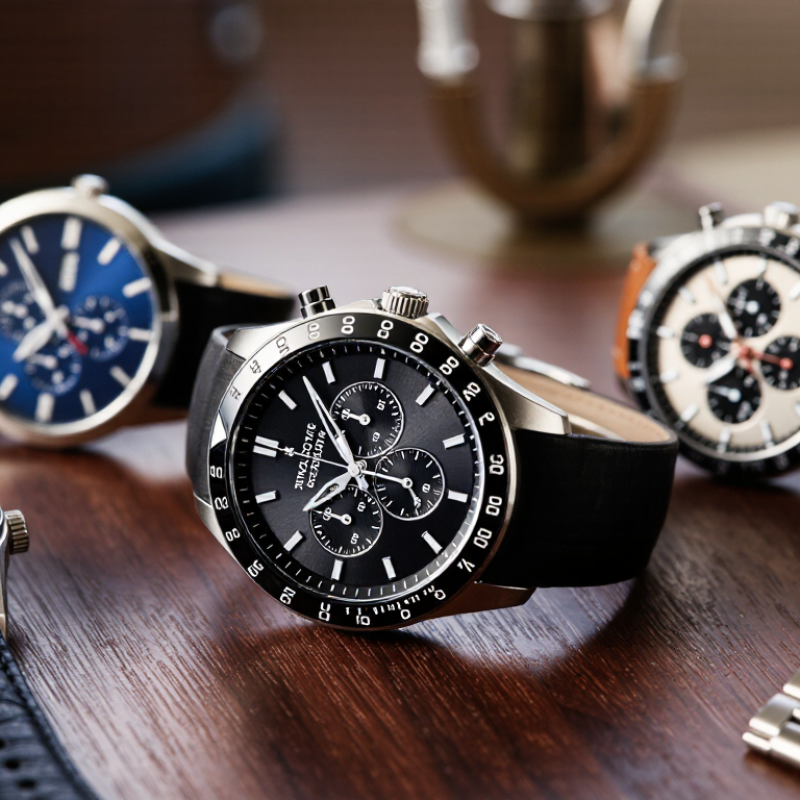
A chronograph is a watch with a built-in stopwatch. Its regular hands show the time, while extra hands and small subdials track elapsed seconds, minutes, or hours. The layout varies, so check what each subdial measures before buying. It can look complicated. In practice, the controls are usually simple: one pusher starts and stops timing, and another resets it. Some watches use a single pusher for all three actions.
Try the pushers and watch the display move. On many models, a long central hand stays still during normal timekeeping, then sweeps around the dial when the chronograph starts. A subdial may count each completed minute. If you time a short walk or a kettle, you can see how the readings work together. Small marks help, but crowded dials can be hard to read at a glance.
Chronographs can use mechanical or quartz movements, and their operation may differ slightly. Read the watch’s instructions, especially before using the pushers near water; water resistance does not mean every control is safe to operate underwater. Reset the timer after stopping it, rather than forcing a hand back. The mechanism is useful, though not always intuitive. A brief hands-on check can reveal whether the controls feel clear and comfortable.
| Tip | What to Check | How the Chronograph Works | Practical Buying Guidance |
|---|---|---|---|
| 01 | Understand the controls | On many chronographs, the upper pusher starts and stops timing, while the lower pusher resets the elapsed-time display after it has stopped. | Try the pushers in person if possible. They should feel clear and easy to operate; the exact layout can vary by movement. |
| 02 | Check the elapsed-time displays | A central hand commonly records elapsed seconds. Smaller subdials may record elapsed minutes or hours, depending on the watch’s movement. | Read the dial or instruction manual to confirm what each subdial measures and the maximum timing interval. |
| 03 | Choose quartz or mechanical | Quartz chronographs use an electronic oscillator and battery. Mechanical chronographs use a mainspring and a system of gears and levers to time events. | Quartz is generally convenient and highly accurate in everyday use. Mechanical watches offer a traditional mechanism but need periodic servicing. |
| 04 | Compare timing accuracy | Accuracy depends on the movement. Quartz watches are generally more accurate than mechanical watches, though actual performance varies by model and conditions. | Check the manufacturer’s stated accuracy or specifications rather than assuming all chronographs perform identically. |
| 05 | Consider the case size and fit | Chronograph movements and their extra displays can make cases thicker or wider than simple time-only watches. | Check case diameter, thickness, and lug-to-lug length. A watch should sit securely without its lugs extending uncomfortably beyond your wrist. |
| 06 | Look for legible markings | Elapsed time is read from the chronograph hands and subdials; some models also include a tachymeter scale for estimating average speed over a known distance. | Choose clear contrast and markings you can read quickly. A tachymeter is useful only when its scale and intended measurement suit your needs. |
| 07 | Check water-resistance guidance | Water resistance is a tested rating, not a guarantee that a watch is suitable for every water activity. Ratings do not directly describe a safe diving depth. | Follow the watch’s specific instructions. Unless the manufacturer explicitly permits it, do not operate the chronograph pushers while the watch is underwater. |
| 08 | Review the crystal and case materials | The crystal protects the dial, while the case material affects weight, appearance, and resistance to everyday wear. | Compare the stated materials and consider your daily use. Sapphire crystal is generally more scratch-resistant than mineral glass, but can still be damaged by impact. |
| 09 | Assess comfort and strap options | Bracelets, leather straps, and other strap materials can change how a chronograph feels and suits different settings. | Check the clasp or buckle, strap width, and whether replacement straps are compatible. Comfort matters if you plan to wear the watch for long periods. |
| 10 | Consider upkeep and warranty | Mechanical movements require maintenance over time. Battery-powered quartz models need battery replacement, and seals may also need attention to preserve water resistance. | Read the warranty terms, service recommendations, and care instructions before buying. Keep documentation and have water resistance checked after relevant repairs. |
It keeps regular time and includes a stopwatch. Extra hands or subdials track elapsed seconds, minutes, or hours. Layouts vary.
One pusher often starts and stops timing; another resets it. Some watches use one pusher for all three actions. Press gently.
Time a short walk or a kettle. Watch the central hand and minute subdial move together. Small marks can be crowded.
Not necessarily. Water resistance does not guarantee safe operation underwater. Check the instructions before using the controls near water.
Start and stop the timer several times. Check whether the seconds hand returns to zero. Sticky buttons deserve a closer look.
Steel can handle knocks but may feel heavy. Titanium is lighter, while leather can wear faster with sweat or rain. No material is perfect.
Compare its case size and lug-to-lug length with a watch you find comfortable. Bend your wrist and check for pressure from the pushers. Try a shirt cuff, too.
Leave money for strap adjustments, servicing, or repairs. Check the case, crystal, warranty, and local service options. Photos can mislead.
I wouldn’t. A watch can look right on paper but catch on your cuff or press against your wrist. The fit may still surprise you.
Buying the right chronograph watch starts with understanding how it works: its stopwatch function can measure elapsed time, while the main display keeps track of the time of day. Before shopping, set a realistic budget and consider which style suits your wardrobe and daily routine. Compare quartz, mechanical, and automatic movements, weighing their differences in convenience, maintenance, and personal appeal.
When assessing Men's Chronograph Watches, check that the chronograph controls and subdials are easy to use and read. Consider the case and strap materials, overall size, comfort, and water resistance to ensure the watch fits your lifestyle. Before making a purchase, verify the watch’s authenticity, review the warranty terms, and research the seller’s reputation. Taking time to compare these practical details can help you choose a dependable watch that offers the features, appearance, and value you want.