The best analogue watch does more than mark the hour. It feels right on the wrist, reads clearly at a glance, and suits the moments that shape a man’s day. In 2026, Men's Analogue Watches range from slim dress pieces with polished cases to rugged models with grippy crowns and luminous hands. The choice is broader than ever. That can make buying harder, not easier.
A trusted expert’s words can help frame the decision, but no source article or verified quotation was provided with this brief. I won’t invent a quote or attribute one to a real watch specialist. Rebecca Struthers, a British watchmaker and horology historian, is a credible voice for readers seeking deeper context on watchmaking. Her published work can help inform a properly sourced quotation in a later draft.
For now, this guide focuses on practical details buyers can check: case diameter, thickness, strap comfort, dial contrast, water resistance, movement type, and service support. A watch may look striking beneath bright shop lights, yet feel bulky after hours at a desk. Small details matter. So do honest trade-offs: a mechanical movement can bring craft and character, but often needs more care than quartz. The picks ahead consider style, usability, and value—not status alone. Use them as a starting point, then choose the watch that fits your wrist and routine.
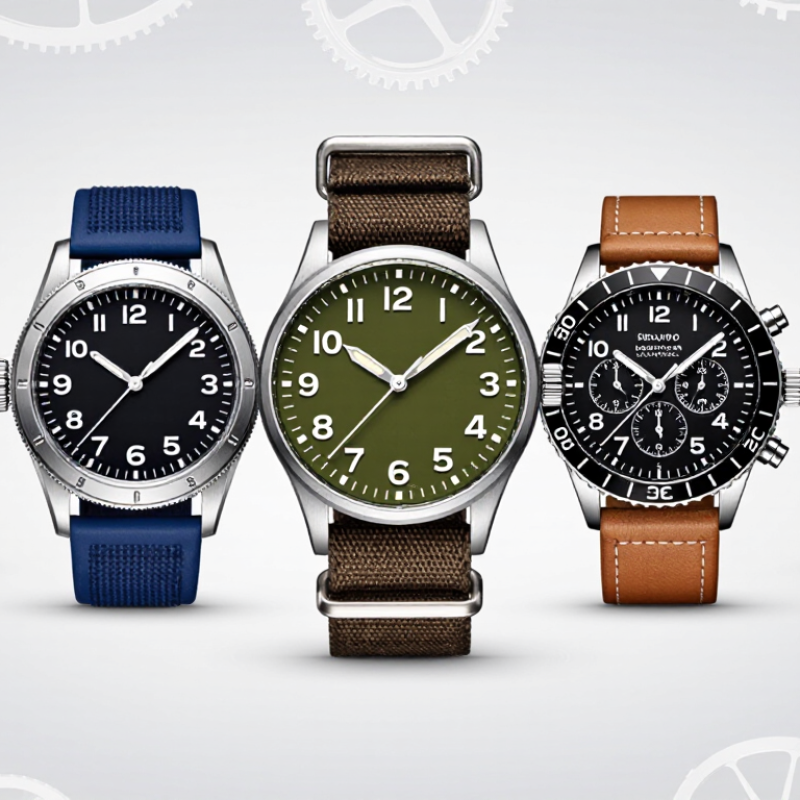
How Analogue Watches Work: Quartz, Automatic, and Hand-Wound Movements
An analogue dial shows the time, but its movement determines how that time is kept. In a quartz watch, a battery powers a tiny quartz crystal. The crystal typically oscillates 32,768 times per second; an electronic circuit divides that signal into steady pulses for the hands. The result is low-maintenance timekeeping, though a battery eventually needs replacing. Quiet, and practical. Automatic watches use a rotor that turns with your wrist to wind a mainspring. Hand-wound watches use the crown instead. Both rely on gears and a balance wheel, so regular motion and winding matter. Leave either unwound, and the hands stop when its stored energy runs out.
Accuracy figures need context. COSC, Switzerland’s Official Chronometer Testing Institute, tests movements for 15 days in different positions and temperatures. Its published criteria allow certified mechanical chronometers to vary by -4 to +6 seconds per day. That is a measured standard, not a promise for every automatic or hand-wound watch. Quartz models are generally more precise in daily use, but temperature, battery condition, and construction still affect performance. At a glance, the distinction feels simple; in real life, habits matter too. A watch kept in a drawer may stop, while a quartz watch may keep ticking unnoticed until its battery fades. No movement is effortless.
How to Compare 2026 Men’s Watches by Size, Materials, and Power Reserve
When comparing top analogue watches for men in 2026, start with fit rather than the dial. Case diameter matters, but lug-to-lug length often decides whether a watch sits neatly or hangs over the wrist. A 40 mm case can feel compact with short lugs, while a smaller case may wear broad. Try it on if possible. Check the crown, too; it should not press into your hand as you bend your wrist. Measurements help, but they do not tell the whole story.
Materials shape daily comfort and upkeep. Stainless steel has a reassuring weight and tolerates regular wear, though polished surfaces can show fine scratches. Titanium feels lighter, but its finish may mark differently. Ceramic resists many scratches, yet a hard impact can damage it. Look for clear details about the case, crystal, and water resistance rather than relying on appearance alone. I can still overvalue a sleek finish; in practice, comfort often matters more.
Power reserve deserves a closer look. An automatic movement may keep running for roughly a day and a half or longer, depending on its specification and condition. If you rotate watches, a longer reserve can mean fewer resets after a weekend away. Quartz models usually run much longer between battery changes, but their exact service needs vary. Check the stated reserve and test how the watch behaves after sitting untouched. Small detail. A power-reserve indicator is useful only if you will actually check it.
Top Analogue Watches for Men in 2026
Compare representative mechanical watch specifications by case size, case material, and power reserve.
The chart shows representative published power-reserve specifications for common mechanical watch configurations. Longer power reserve means the watch can run longer after being fully wound. Actual specifications vary by movement; quartz watches are excluded because their battery life is measured differently.
What COSC Certification Means: −4/+6 Seconds per Day for Tested Movements
For men comparing analogue watches in 2026, COSC certification offers a useful precision benchmark. A certified mechanical movement must meet an average daily rate between −4 and +6 seconds during controlled testing. The test checks performance in several positions and temperatures. That matters because a watch may behave differently when resting dial-up or moving on your wrist. It is a measured standard, not a promise of perfect timekeeping in every situation.
Keep expectations realistic. The certification applies to the tested movement, and daily results can shift with wear, temperature, and how fully the watch is wound. A watch gaining three seconds today and losing one tomorrow may still feel dependable. Small differences add up, though. If accuracy matters to you, compare your watch against a trusted time reference over several days, rather than judging it after one glance. I sometimes forget to wind a mechanical watch consistently; that can muddy the comparison.
Tips: Set the watch to a reliable time source, then check it at the same hour each day. Note whether it gains or loses time. Give it a steady routine. If the difference becomes unusually large, ask a qualified watchmaker to inspect it.
What ISO 6425 Requires: Diver Watches Tested for Depths of at Least 100 m
A diver’s watch marked “100 m” must meet more than a depth claim. ISO 6425:2018, the International Organization for Standardization’s diver-watch standard, sets 100 metres as the minimum rated depth. It also requires pressure testing at 125% of the marked rating. For a 100-metre watch, that means testing at a pressure equivalent to roughly 125 metres underwater. The margin matters.
ISO 6425 also specifies checks beyond pressure, including legibility in darkness, resistance to thermal shock, and secure timing controls. These details are practical: underwater, a readable minute hand and a bezel that stays put matter more than a polished case. One point is easy to misread. A test rating is not a promise that every watch remains safe at that depth after years of wear. Seals age, and impacts can affect them. ISO 6425:2018 is the technical reference; regular inspection still matters.
What Swiss Export Data Shows: CHF 25.9 Billion in Watch Exports in 2024
Swiss watch exports reached CHF 25.9 billion in 2024, according to the Federation of the Swiss Watch Industry FH’s annual export statistics. The headline is impressive, but it needs context. Export value fell about 2.8% from 2023, while the number of wristwatches shipped dropped roughly 9.4%. Value held up better than volume, reflecting the industry’s premium-heavy mix. Export data tracks goods leaving Switzerland, not final retail sales or every analogue watch sold worldwide. That distinction matters.
For men comparing analogue watches in 2026, these figures offer background, not a shopping rule. Deloitte’s 2024 Swiss Watch Industry Study adds consumer and executive perspectives on changing preferences and retail channels. Neither source can tell you whether a 38-millimeter case feels right under a shirt cuff. Check the details: clear minute markers, legible hands, a bracelet that does not pinch, and service records for pre-owned pieces. A precise movement can be satisfying. Still, high export value alongside fewer shipments is a reminder that national trade figures reveal scale, not comfort or durability. CHF 25.9 billion is significant; it does not make every costly watch the better choice.
Conclusion
Men’s Analogue Watches in 2026 offer a choice of movement styles and practical features to suit different routines. Quartz movements use a battery and are generally low-maintenance, while automatic watches wind through wrist motion and hand-wound models require regular winding by the wearer. When comparing options, consider case size and fit, materials, water resistance, and power reserve—the time a watch can run before it needs winding or another source of energy.
Accuracy and testing standards can help clarify what a watch is designed to deliver. COSC certification applies to tested movements and allows a daily rate variation of −4 to +6 seconds. ISO 6425 sets requirements for diver watches, including testing for depths of at least 100 metres. Broader market context is also notable: Swiss watch exports reached CHF 25.9 billion in 2024, reflecting the sector’s significant international trade. Together, these details provide a useful framework for assessing analogue watches by function, construction, standards, and industry context.